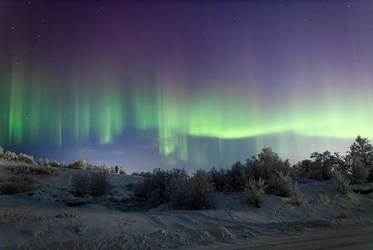
Where best to see Norway's Northern Lights
Witnessing the Northern Lights appears highly on many travellers' bucket lists and with good reason: this natural phenomenon is truly breathtaking. While sightings have appeared several times in the UK over the past couple of years, there's something magical about seeing the Aurora in foreign skies.
One of the best ways to experience the wonder of Norway's wilderness and have the chance to witness the Aurora Borealis, is to embark on an unforgettable cruise around Norway. Voyage through majestic fjords, past towering mountains and combine stargazing and wildlife-spotting opportunities with the unique sight of the Northern Lights, in the company of experts who'll guide you along the way.
If you're yet to see the Lights in all their glory, our guide will give you everything you need to know.
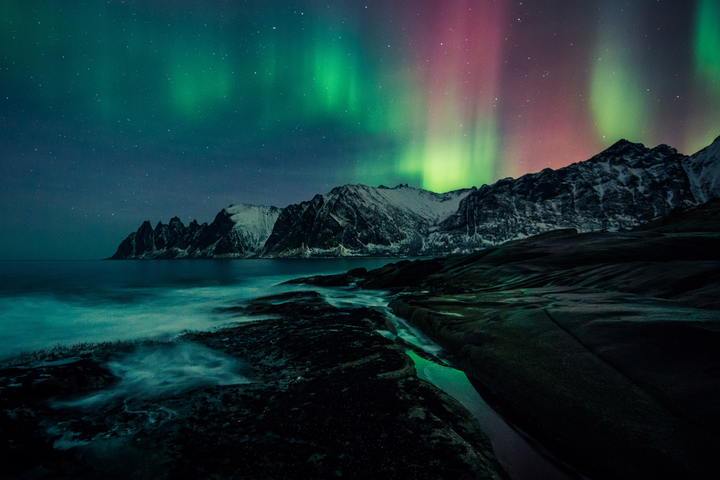
The Northern Lights, also known as the Aurora Borealis, are one of the greatest natural light shows on earth, and have captured the imaginations of many from all around the world. It is often top of many travellers' bucket lists, luring visitors from far and wide who are eager to catch a glimpse of this extraordinary phenomenon.
The Northern Lights occur when atom particles charged from the sun interact with the Earth's magnetic field. This creates a shimmering display of vibrant shades of green, blue, pink and purple, that appear to dance across the night sky, creating an unforgettable experience for anyone fortunate enough to witness this mesmerising spectacle.
Norway is one of the most popular locations within the Arctic Circle for spotting the Aurora, due to its remote northern position which provides exceptional viewing conditions, far away from city light pollution.
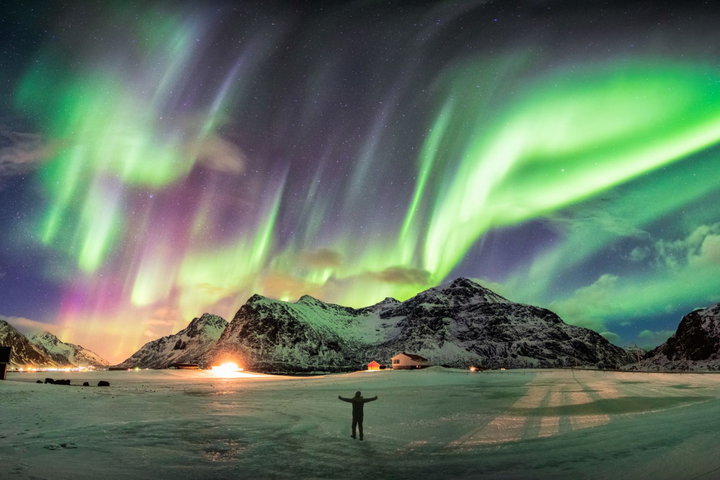
Did you know that you can experience the Aurora Borealis anytime between late September and early April? However, the peak months are between October and March, when the nights are at their longest and darkest, particularly in Northern Norway.
Peak times are generally between 11pm and 2am, but the Northern Lights can be seen as early as 6pm if conditions are right. Displays can vary from a couple of minutes, later returning, or last for 20-30 minutes - or even an hour.
Conditions and timings really matter, and it's difficult to predict, as the Aurora doesn't stick to a schedule. Crisp, cold air provides the perfect conditions, and the sky needs to be clear of cloud. On our cruises with Hurtigruten, you can be assured that you are travelling with the experts and if you don't see the Northern Lights on your voyage, you'll be offered a free cruise to return and hopefully witness them. That's the Northern Lights promise.
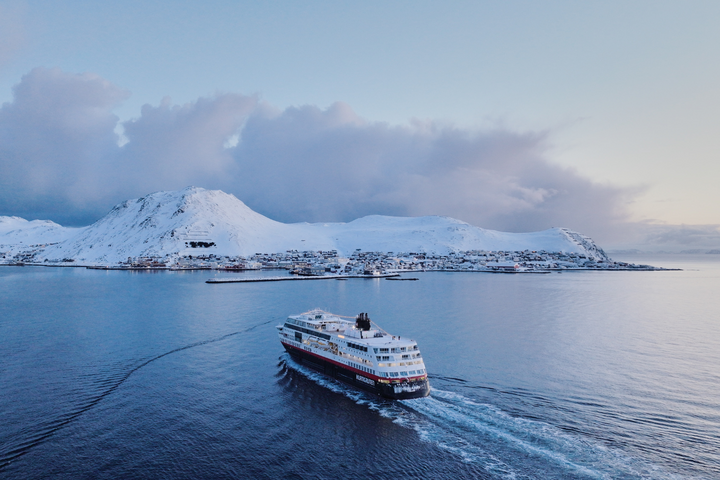
The best place to see the Northern Lights is anywhere above the Arctic Circle. On our 12-day cruise of Norway, there will be plenty of opportunity to catch the Aurora as your ship sails northbound, past the Arctic Circle and away from light pollution. Some of the best places include Tromsø, the North Cape (from the port of Honningsvåg), Alta, Kirkenes and the Lofoten Islands.
Tromsø
Often referred to as the 'Arctic' or 'Northern Lights' capital, Tromsø sits 350km above the Arctic Circle and therefore boasts some of the best conditions for witnessing the Aurora Borealis. Some of the highlights of Tromsø are the Polar Museum, which chronicles the city's legacy of Arctic hunting and trade; the Polaria centre, an aquarium home to a variety of Arctic marine species; and the Arctic Cathedral, with its striking design and impressive stained-glass window.
North Cape
The North Cape, also known as Nordkapp is the northernmost point of mainland Europe and its location is perfect for Northern Lights viewings. Marked by the iconic globe monument, the North Cape looks out onto the Barents Sea, and it might feel as though you are at the edge of the world. At the visitors' centre, you can learn about the history of the Finnmark region, as well as watch a video of the area throughout the seasons, while finding out more about the Northern Lights. Tripsmiths team member Lucy shared her experience of cruising with Hurtigruten and seeing the Northern Lights on our blog.
Alta
Alta is home to some of the clearest skies and this town in the Finnmark region also houses the Northern Lights Cathedral. A well-known structure, once inside, you'll be met with the titanium-clad spire, which is said to represent the phenomenon of the Northern Lights. In Alta, you can also stay at the iconic Ice Hotel, a structure made completely of snow and ice, with annual carvings set around a particular theme. Set well away from urban lights, you're well placed for experiencing the Aurora, completely uninterrupted.
Kirkenes
Kirkenes is in the far northeast of Norway, in the Barents region and this smaller town enjoys some of the most intense Northern Lights activity. On our Norway cruise, Kirkenes is the turning point, from which you'll begin to travel southbound. While here, you're likely to see Arctic wildlife including lynx, wolves and brown bears. Plus, the area is famed for its king crab. Kirkenes also has a Snow Hotel, an ideal way of taking in the Aurora.
Lofoten Islands
The Lofoten Islands sit above the Arctic Circle, and the archipelago combines dramatic scenery with excellent Northern Lights spotting. Made up of several fishing villages, Lofoten has a strong connection with the Viking era and Svolvær is its largest town, which is your likely destination when cruising. Surrounded by dramatic peaks and fjords, Svolvær offers a mixture of outdoor pursuits such as hiking and fishing, alongside art galleries, and the Lofoten War Memorial Museum. If conditions are right, expect stunning views of the Northern Lights.
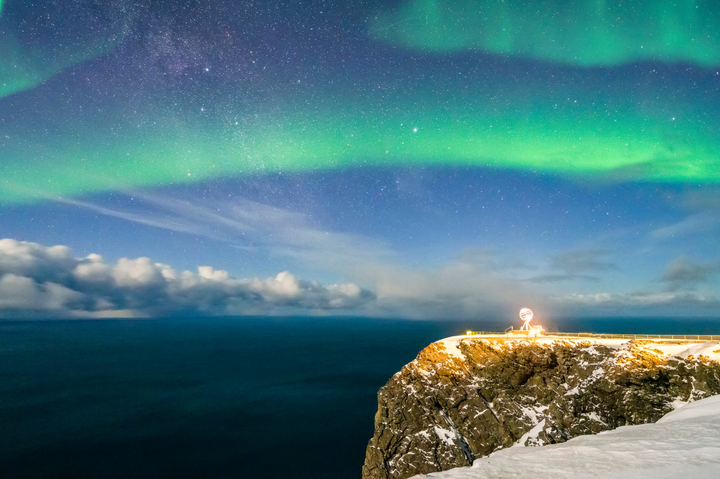
While you cannot predict when the Northern Lights will make an appearance - and that's what makes it such a phenomenon - here are some things to consider. For more Northern Lights content, check out our exclusive chat with Chief Aurora Chaser, Tom Kerss.
Be patient
Some displays will be spectacular, others will be less so. Be prepared to wait around, particularly if skies are cloudy. The Aurora can come and go and can even begin as a faint green line on the horizon. Keep watching, even if it appears that nothing is happening. If you're on our Norway cruise, you can set alerts from the phone in your cabin, so even if you're sleeping, you have the opportunity to head out on deck and see the lit-up night sky.
Wrap up warm
With a lot of waiting around in crisp, cold conditions, it's best to wrap up warm. Our cruise guide includes a few tips on what to pack, but wearing several thin layers is always a good idea. A weatherproof coat, hat and gloves are necessities, and don't forget some walking boots or other sturdy footwear.
Pack your camera
Whether you're using your smartphone or packing a camera with a tripod, remember that the Northern Lights will look different with the naked eye than it does through a lens. You can experiment with light settings and sharpness but don't panic if you don't get the perfect shot and just enjoy the experience.